

There is something deeply special about a piece of jewelry celebrating the most beautiful Catalan tradition being created by Catalan hands. It's not a coincidence. It's not marketing. It's consistency.
This blog takes you behind the scenes. To the workshop where our Sant Jordi roses are born. To the hands that sculpt them. To the process that transforms cold metal into warm symbols of eternal love.
Because when you understand how something is made, you value it differently.
Why Sant Jordi is Special for Persea
Sant Jordi is not just another holiday on our calendar. It is THE holiday. The one that reminds us why we do what we do.
Persea was born in Barcelona. Our founder moved here years ago, grew up here, and in those 8 years, she experienced every April 23rd watching the city transform into a sea of red roses and book stalls. That magic stuck with her.
When we decided to create jewelry, we knew we would eventually do something for Sant Jordi. We couldn't not do it. It would be like growing up in Barcelona and not having an opinion on Barça or the Sagrada Familia.
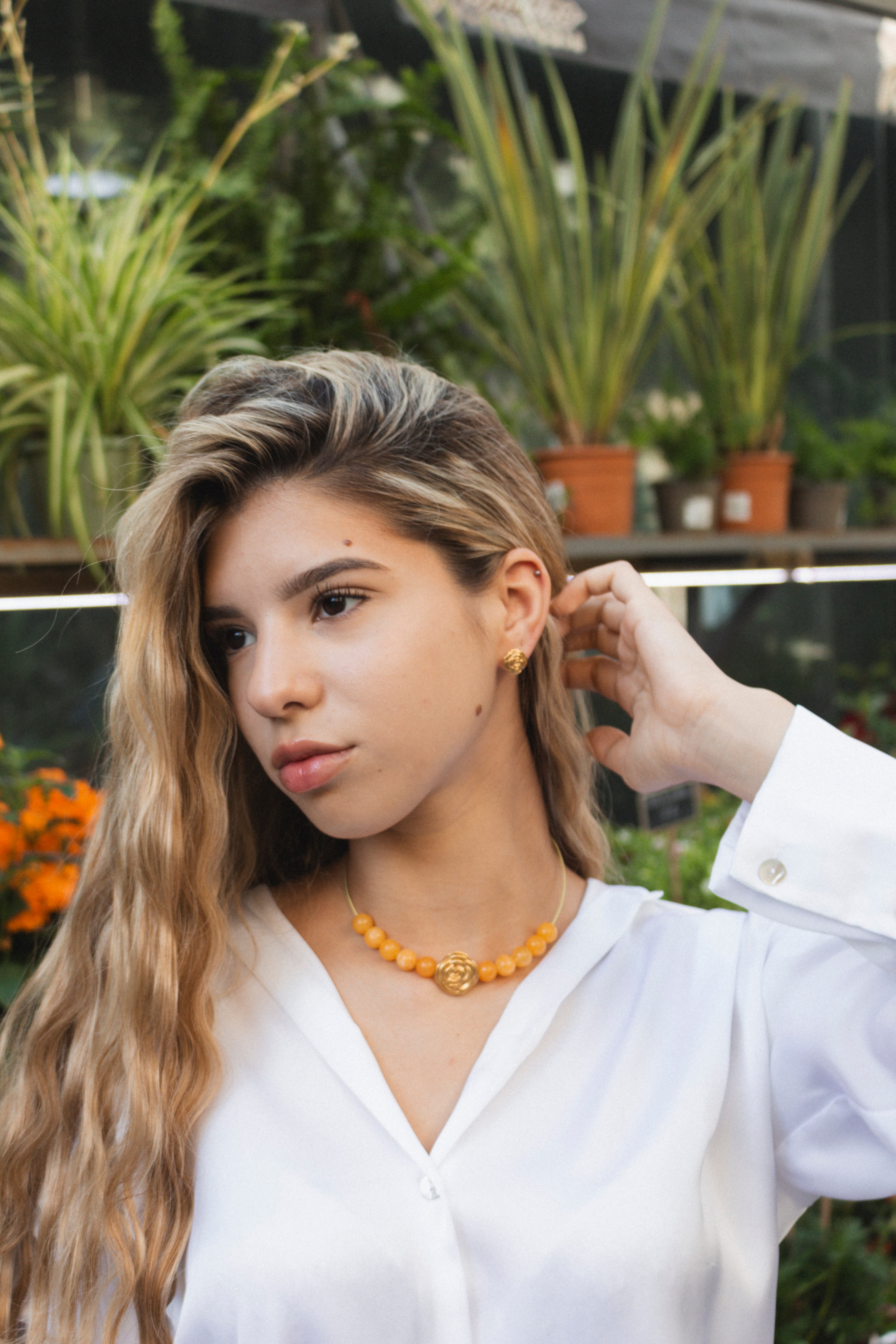
But we didn't want to make generic Sant Jordi handcrafted jewelry. We wanted to capture something deeper: the essence of why the rose Sant Jordi gave the princess was important. Not because it was beautiful (which it was), but because of what it represented.
Permanence. Bravery. Love that conquers fears.
And so our Sant Jordi Collection was born: roses that don't wilt, made with techniques that don't rush, by hands that understand that some things deserve time.
The Journey of a Rose: From Concept to Your Hand
Step 1: Design in Our Barcelona Studio
It all starts with observation. We study real roses for weeks. Not to copy them exactly (that would be boring), but to understand their invisible architecture.
Why is a rose recognizable as a rose even from a distance? What makes its petals look soft even if they are metal? How do we capture movement in something static?
Our chief designer, with over 15 years of experience in fine jewelry, makes dozens of sketches. Some we discard immediately. Others we refine. Eventually, one emerges as "the one."

What we look for:
- Perfect proportion: neither too realistic nor too abstract
- Details that capture light in an interesting way
- Dimension: looks good from all angles
- Feasibility: can be manufactured while maintaining quality
This process can take weeks. It cannot be rushed. Inspiration strikes when it strikes.
Step 2: Wax Modeling - The Heart of the Artisan Process
This is where the magic truly happens. Where the flat drawing becomes a three-dimensional object.
The Lost Wax Casting Technique
This method is over 5,000 years old. The Egyptians used it. Renaissance artisans perfected it. And we still use it today because there is simply nothing better for high-quality handcrafted jewelry.
How it works:
Stage 1: Our artisan takes a block of jewelry wax (similar to beeswax but with specific properties for this work).
Stage 2: With delicate tools (some purchased, many handmade by the artisan himself), he begins to carve. Petal by petal. Curve by curve.
This work requires:
- Absolutely steady hands
- Developed spatial vision
- Infinite patience
- Years of experience
A single wrong move and the piece is ruined. You have to start over.
Stage 3: The wax rose is polished, details are refined, and it's checked from all angles under natural and artificial light. If something isn't right, it's corrected. Or it's discarded and started over.
Stage 4: When the wax piece is perfect, it's prepared for casting.
Why This Makes Each Piece Unique
Although we work from the same design, manual wax modeling means that no two roses are exactly alike. There will be micro-differences in:
- The thickness of certain petals
- The depth of certain curves
- The texture of certain surfaces
These differences are imperceptible to the naked eye. But they are there. And they are the signature of handmade work.
It's not a defect. It's proof that human hands, with all their tremble and individuality, created your piece.
Step 3: Casting - When Wax Becomes Silver
The wax piece travels to our trusted caster in Barcelona (we've worked with him since Persea's inception). There, alchemy happens.
The technical process:
1. Mold Creation:
The wax rose is surrounded by liquid refractory plaster which hardens. It's left to dry completely (24-48 hours).
2. The "Loss" of the Wax:
The mold is placed in a high-temperature oven. The wax melts and flows out through specially designed channels, leaving an exact hollow with the shape of the rose.
Hence the name: "lost wax." The wax is sacrificed for the metal to be born.
3. Silver Casting:
925 silver (92.5% pure silver, 7.5% other metals for durability) is heated until melted (961°C). It's poured into the still-hot mold.
4. Cooling and Extraction:
The metal solidifies. The plaster mold is broken (it cannot be reused). And there it is: your rose, now in silver, with every detail perfectly captured.
5. Initial Cleaning:
Plaster residues are cleaned, the sprue system is cut, and a first quality inspection is performed.
Step 4: Manual Finishing - Where the Rose Comes to Life
The piece returns to our workshop in Barcelona. Now comes the most delicate work.
Surface Polishing
With progressively finer polishing tools, every surface of the rose is worked. The outer petals are polished to a mirror shine that dramatically catches light.
This process can take hours for a single piece, depending on its size.
Darkening of Recesses
To add depth and dimension, the spaces between petals are slightly darkened using controlled oxidation. This makes the rose visually "pop," instead of looking flat.
It's a delicate balance. Too dark and it looks dirty. Too little and the dimension is lost.
Application of Gold Plating (If Applicable)
For gold-plated pieces, this is the final and most critical step.
Our Gold Plating: 3 Microns of 21kt
This is where Persea radically differentiates itself from the market:
Industry standard: 2-3 microns of gold
Persea: 3 microns of 21 karat gold
What does this mean?
- Double durability: Resists wear for twice as long
- Richer color: 21kt has more pure gold than 18kt, a warmer color
- Less maintenance: Maintains shine with less care
- Justifies the investment: If you're going to invest in a piece of jewelry, make it one that lasts
The plating is applied through electroplating: an electrochemical process that deposits gold onto silver in a uniform and durable way.
Final Quality Inspection
Before any rose leaves our workshop, it undergoes rigorous inspection:
✓ Is the polishing perfect from all angles?
✓ Is the gold plating (if applicable) uniform?
✓ Do the clasps (on earrings) work perfectly?
✓ Are the chains (on necklaces) the exact length?
✓ Does the piece meet our standards for weight, dimension, quality?
If something isn't right, it doesn't leave. It's corrected or discarded.
There's no pressure for monthly quotas. There's no "good enough." There's only one standard: excellence.
The Materials: Why What We Use Matters
925 Sterling Silver: The Gold Standard (Literally)
We use 925 silver, also known as sterling silver. This means:
92.5% pure silver: The actual precious metal
7.5% other metals (usually copper): For structural durability
Why not 100% pure silver?
Because it would be too soft. It would deform, scratch, and not hold its shape. The 925 alloy is the perfect balance between purity and functionality.
Properties of our silver:
- Hypoallergenic (perfect for sensitive skin)
- Infinitely recyclable without loss of quality
- Can be polished and restored years later
- Maintains intrinsic value
21 Karat Gold: Why We Choose This Purity
Gold is measured in karats (kt), where 24kt is pure gold.
18kt (75% gold): Common standard in jewelry
21kt (87.5% gold): Our standard
Advantages of 21kt:
- Warmer, richer color (more gold = more intense yellow)
- Closer to purity without sacrificing durability
- More intrinsically valuable
- Reflects our commitment to maximum quality
The Thickness That Makes a Difference: 3 Microns
A micron (μm) is one-thousandth of a millimeter. It sounds tiny. But in gold plating, the difference between 0.5, 1, and 3 microns is huge.
0.5-1 micron plating (fast fashion standard):
- Lasts 6 months with regular use
- Quickly shows wear
- Requires frequent re-plating
- Justifies the low price
3 micron plating (Persea standard):
- Lasts 1-5 years with regular use
- Maintains color and shine much longer
- If it eventually needs re-plating, we do it
- Justifies the long-term investment
It's the difference between disposable jewelry and heirloom jewelry.
Why Choose Catalan Artisan Jewelry
When you buy our Sant Jordi jewelry, you're not just buying a quality piece. You're participating in an entire ecosystem:
You Support Skilled Local Employment
Our artisans in Barcelona have been perfecting their craft for years. They are master jewelers with decades of experience who could work for big luxury houses, but they choose small workshops where quality is non-negotiable.
By buying Persea, you help maintain these jobs in Barcelona. In a city where more and more artisan industry is disappearing due to tourism and technology, this matters.
You Keep Artisan Traditions Alive
The lost wax technique has existed for millennia, but every year fewer young people learn it. It's easier to program a CNC machine than to hand-carve wax.
But a machine will never capture the soul that human hands put into their work.
By valuing (and paying for) artisan jewelry, you ensure that these techniques are passed on to the next generation.
You Reduce Your Environmental Footprint
Industrial jewelry:
- Mass production (thousands of identical pieces)
- Transport from Asia (huge carbon footprint)
- Materials of dubious origin
- Designed to be disposable (fast fashion)
Persea artisan jewelry:
- On-demand production (minimal waste)
- Zero-kilometer Barcelona-Catalonia
- Traceable and recyclable materials
- Designed to last generations
We are not perfect. But every conscious choice adds up.
You Get a Story to Tell
When someone asks you "where did you get that?" (and they will ask you), your answer won't be "from an online store" or "I don't remember."
It will be: "It's from an artisan workshop in Barcelona. Each rose is hand-sculpted in wax. They use a 5,000-year-old technique. The gold plating is twice as thick as the standard..."
And you will have educated someone about the value of craftsmanship. And perhaps, inspired that person to also value manual work.
The Sant Jordi 2026 Collection: Available Pieces

Necklaces
Sant Jordi
Jardinet
Bouquet
Earrings
Rosa in topo
Long rose
Rings
Rosetta
Adjustable:
Adapts to multiple sizes (perfect if you don't know the exact one)
Care: How to Keep Your Eternal Rose Beautiful
Although our jewelry is made to last, a little care keeps it impeccable:
Daily Use
✓ Put it ON AFTER makeup/perfume/cream
✓ Take it OFF BEFORE showering/swimming/beach
✓ Avoid contact with chemical cleaning products
Storage
✓ Store in its pouch when not in use
✓ Avoid it touching other jewelry (they can scratch each other)
✓ Dry place (humidity can oxidize)
Cleaning
✓ Soft microfiber cloth when it loses its shine
✓ Warm water + neutral soap for deep cleaning
✓ Dry completely before storing
Restoration
If after years the gold plating shows wear, bring it to our workshop. We can re-plate it and it will look like new.
That's quality jewelry: it's restored, not thrown away.
True Luxury: Time, Hands, Tradition
We live in a world obsessed with fast and cheap. Amazon delivers tomorrow. Zara releases collections every week. Everything is disposable.
In that context, creating jewelry that takes weeks, using ancient techniques, with hands that have studied for years... is almost an act of rebellion.
But it's the only way we know.
Because we believe Sant Jordi deserves more than fast fashion jewelry that oxidizes in three months.
It deserves symbols that last as long as the love we celebrate.
It deserves craftsmanship that honors the Catalan tradition of doing things well, without rushing, with pride.
That's what we do at Persea. Every day. Every rose. Every piece.
This Sant Jordi, Choose What's Made with Soul
In a world of industrial production, choosing craftsmanship is an act of resistance.
It's saying: "I value the time this took. I respect the hands that created it. I understand that good things cannot be fast or cheap."
This Sant Jordi 2026, when you give (or treat yourself to) a Persea rose, you will know exactly what you are holding:
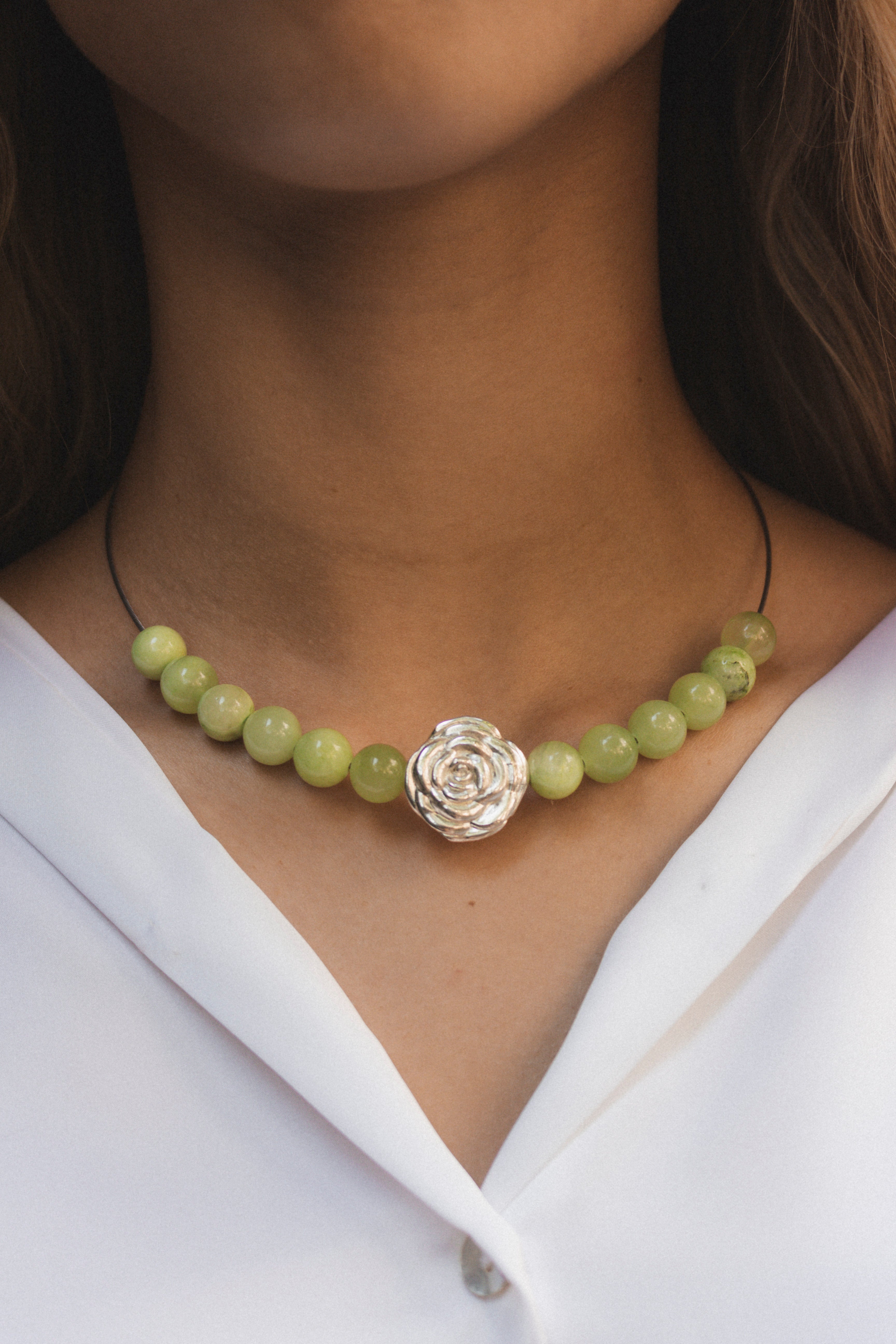
Weeks of work. Ancient techniques. Expert hands. Noble materials. Catalan tradition. Love for the craft.
That is priceless. But it does have value.
Discover our Sant Jordi 2026 Collection. Jewelry Made in Barcelona, with artisan love.
EXPLORE COLLECTION
LEARN MORE ABOUT PERSEA
Persea Jewelry - From Barcelona to the world, with artisan pride